
Think Inside the Box
I'm currently reading 'Inside the Box' by the ever-excellent David Epstein. (If you haven't read 'The Sports Gene' and its follow-up, 'Range', I highly recommend both.)
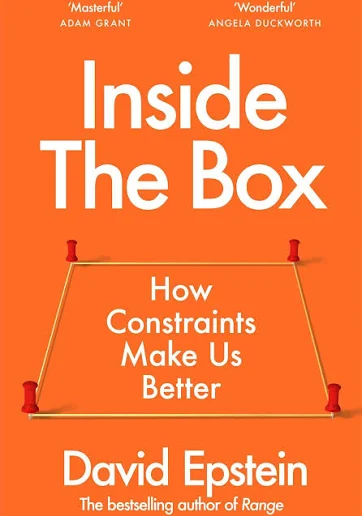
The book challenges the common assumption that creativity is the freedom to choose from an infinite number of possibilities, and that the most creative among us simply make the best or most unique choices. Through examples ranging from Mendeleev's development of the periodic table to Virginia Woolf's experiments with literary form, Epstein argues that breakthroughs often come by way of constraints directing our attention and energy, that creativity is problem-solving within parameters defined either externally (market pressures, resource availability, and so on) or internally (self-imposed restrictions intended to force us out of whatever rut we've ended up in).
I recently posted a throwback of my first ever muscle-up, and reading Epstein's ideas reminded me of the context of that breakthrough. The CrossFit Open was coming up and I was identifying weak points in my training, one of which was chest-to-bar pull-ups. Naturally I did them every day until my calluses started bleeding, forcing me to take a break from the very thing I was trying to refine. Every time pull-ups came up in class I did ring rows instead, gradually building to a feet-elevated version as my hands healed.
After about two weeks I was back to full training and muscle-up practice was programmed. To my surprise I got over the rings for the first time, only for my coach to point out that a ring row's horizontal pull mimics the muscle-up far better than a vertical pull-up does.
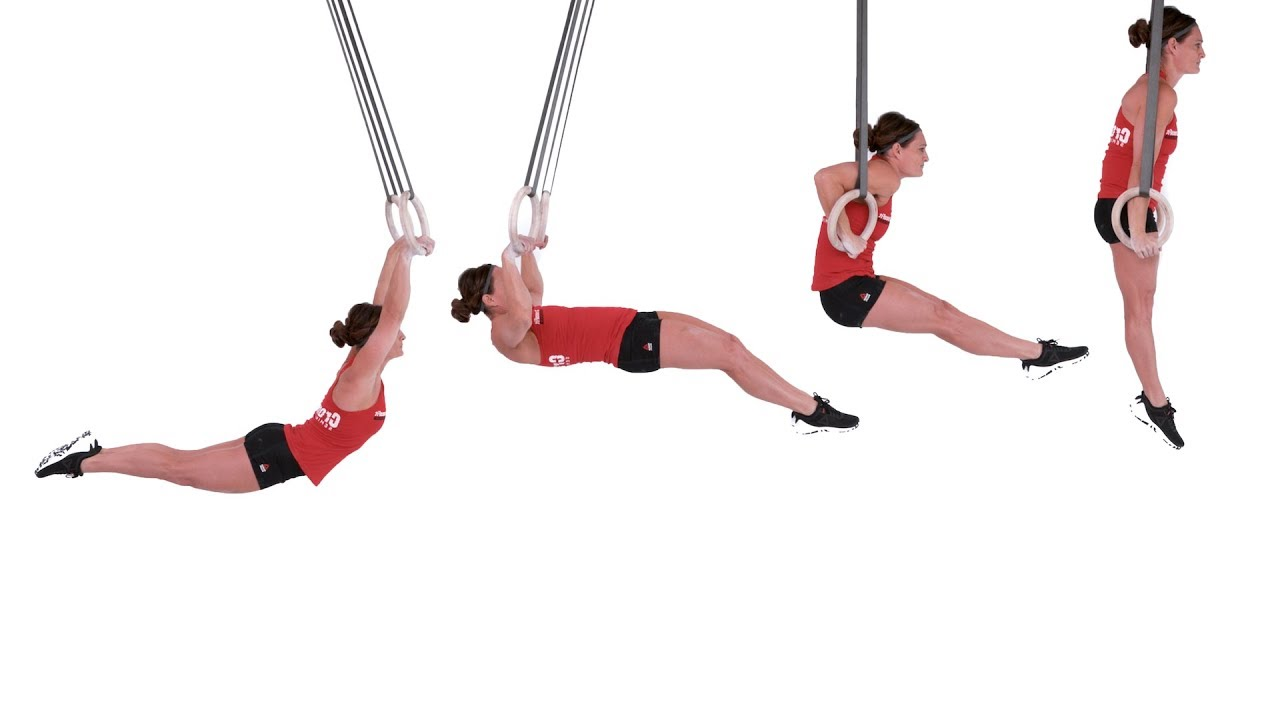
Were it not for the constraint of that minor hand injury I wouldn't have spent time on the progression necessary for the breakthrough. This is common in training: we focus on the most advanced version of whatever we're working on that day (pull-ups over ring rows, double unders over single skips), but mastery requires us to revisit the foundational movements periodically. The insights we gain from the more challenging versions can then be applied back to the basics, making the foundation more solid and feeding forward to the next skill. My double unders are far better for having taken the time to develop capacity in the crossover, for example, despite it sitting lower on any theoretical hierarchy of skill.
Chris Hinshaw highlighted this at a training camp for elite-level CrossFit athletes, tasking them with single skips in a workout. So focused were they on a tested movement of the CrossFit Games, the double under, that they'd lost the rhythm and timing of singles altogether. Use it or lose it. Tested at that moment, many of us would have scored higher than some of the best in the sport, simply because those athletes had trained specifically for a test, not for general capacity.
Progress is not linear, and breakthroughs can come from what looks like a setback, though you needn’t wait until you're injured to revisit the basics. Next time double unders are programmed spend a few minutes on your singles first, or do the workout using crossovers. Scale movements back on purpose for a session, and pay attention to how much easier the foundation feels now. Wall walks, ring rows, rope climb-pulls, these aren’t steps backwards. They’re the clearest measure you have of your development, and are what makes the next breakthrough possible. Choose your constraint before one chooses you.
