
Storage & Structure
One framework from my study of exercise physiology that I hadn't previously considered presents different tissues as both structure and storage. Consider bone, for example. While providing scaffolding for the body bones are also a means of storage for various minerals such as calcium and phosphorus, releasing as much into the body as they absorb.
Muscle similarly stores both proteins, which can be liberated in cases where inadequate dietary sources are consumed, and carbohydrates, used for fuelling work while the fat-fuelled oxidative engine revs up or in circumstances where that engine can't meet the demands of the work.
Adipose tissue stores fat just under the skin throughout the body (Even the leanest runner has enough body fat stored to fuel many more hours of work than required by a marathon).
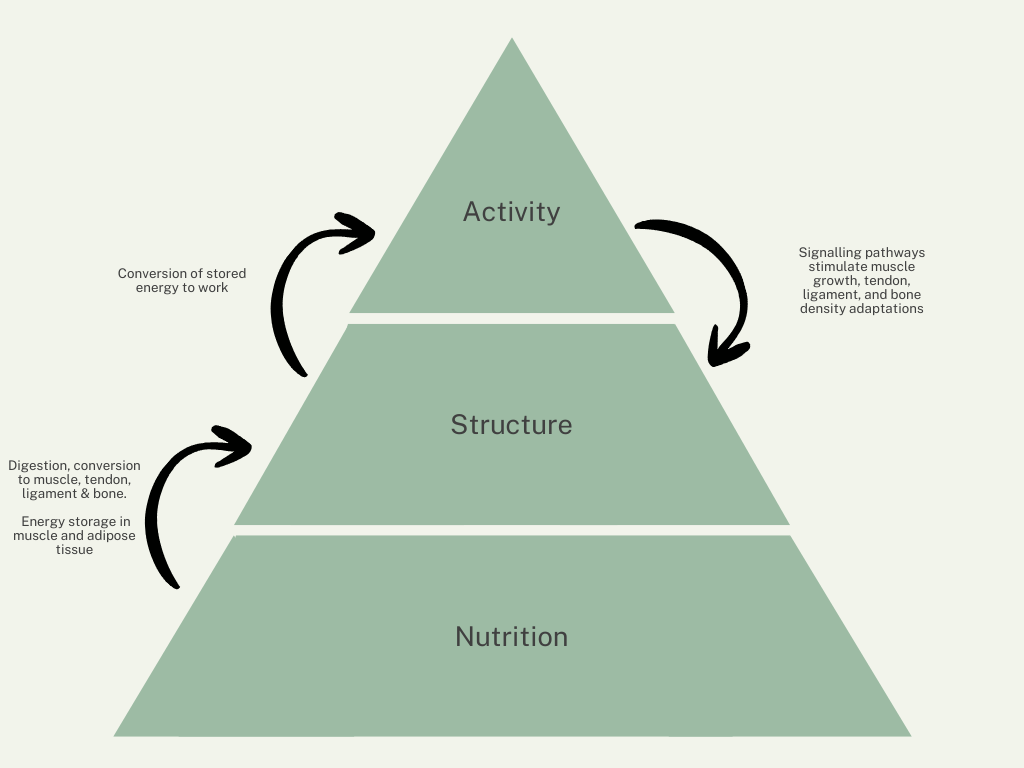
We can build a hierarchy of function to visualise this, from input via nutrition, to storage via physical structure, to output via activity. Ideally our nutrition provides an adequate base to support the structure, which in turn is sufficient to support activity.
This visual can also be used to represent what we look for in an ideal "diet" (In the colloquial sense of "weight loss nutrition plan"). The gap left by nutrition is filled by structure, namely the breakdown of muscle and fat, resulting in weight loss. Even in the most conservative deficits nobody burns fat alone, some muscle is broken down, too.
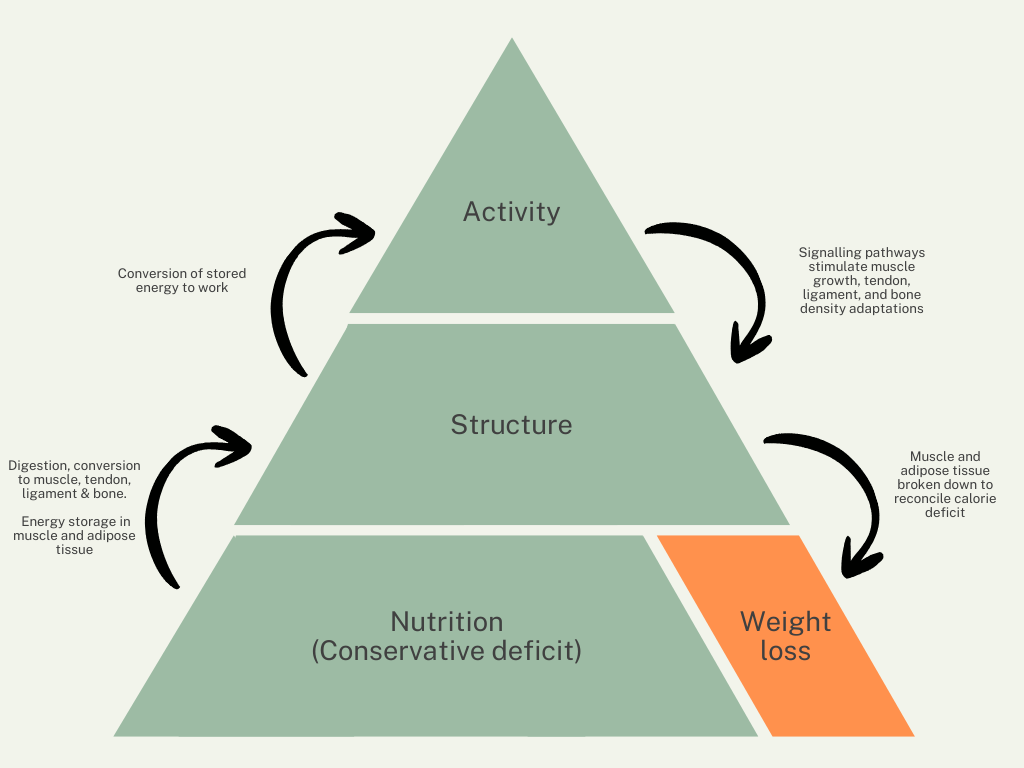
It can be helpful to think of nutrition this way, nutrients passing through the body, reconstituted every few weeks. Doing so makes clear the transient nature of both favourable and unfavourable nutrition habits.
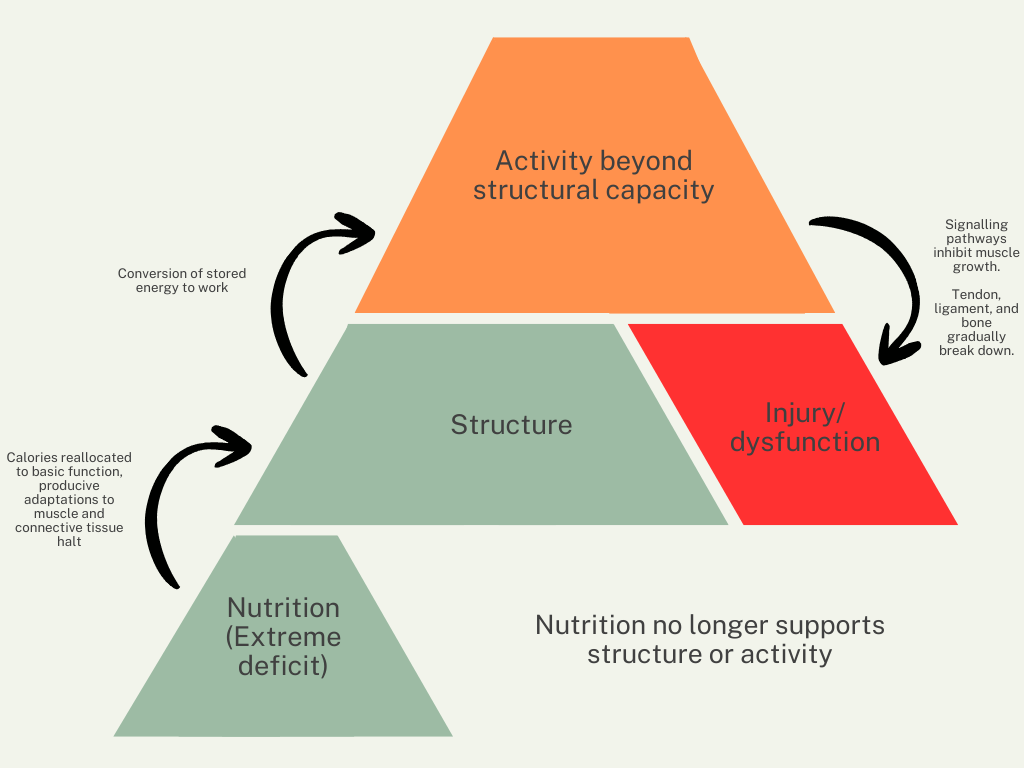
Sadly all too often we don't see the ideal, and the errors made by many are understandable. Eat less, move more is an intuitive principle but has well understood limits in research. Hack away too much nutrition and both structure and activity are affected. Compound this with attempts to increase activity levels while restricting the nutrition required to support the endeavour and it's no wonder most attempts to modify body composition are unsuccessful.
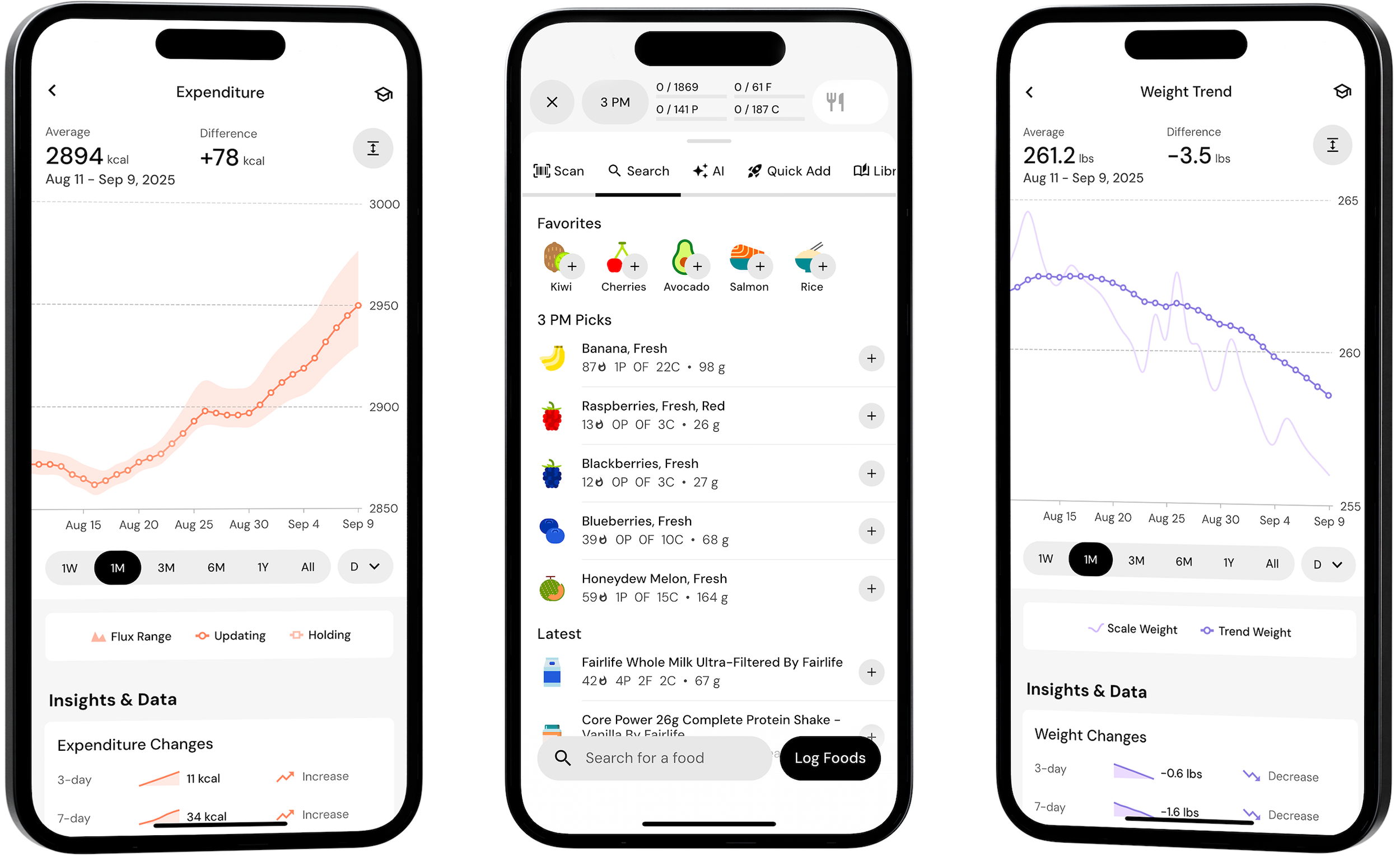
We are huge fans of Macrofactor, a coached nutrition app that allows you to track a broad range of nutrients. We've worked with dozens of members on their nutrition over the past five years and there are two main categories of change.
Quantity: When I have no particular goal and my intention is to maintain my physique and adequately fuel my training my lunchtime meal is 250g of pasta, 250g of ragu (5% minced beef, 2 cans tomato, 1 onion, 3 pressed garlic cloves, 1 pack chestnut mushrooms, diced. Reduce on low heat, thank me later). When I've not tracked for a while, over Christmas for example, and I have weight I'd like to lose I'll have 200g of each.
Do you know what those two meals look like in a bowl? Almost exactly the same. This is a double-edged sword; the good is that most of us only need to make minor tweaks to achieve an outsized benefit from our nutrition, the bad is that the tweaks require a degree of attention that can seem arduous.
The other side of this discussion covers roughly half of the members we've worked with who can't believe how much they're able to eat and still lose weight, because of the second general category of change...
Quality: Pasta is calorie dense, it has more calories per gram than tomato or mushroom, both of which are examples of nutrient dense food, which contain vitamins and minerals essential for metabolic function. Both are necessary. As my old coach put it "I've tried getting all my carbs from salad. I felt like cattle, endlessly grazing on plants." The other end of that spectrum is the "If it fits your macros" crowd who wilfully deny the fact that the strawberry jam in a doughnut does not count as a serving of fruit.
These differences can be reconciled by placing adequate amounts of nutrient dense foods at the base of our nutrition, then adding calorie dense foods to account for energy needs. Macrofactor will update calories every week based on weight trends to keep you on track. You can also track key micronutrients to target deficiencies (Spoiler: You probably need more fibre, but that's a whole other post).
Often prioritising the nutrient dense food has a domino effect, crowding out the more palatable processed foods that are calorie dense and can lead to weight gain, but are by no means a chemical death sentence handed out by the food industrial complex as the more alarmist sectors of the internet would have you believe.
These 800-odd words highlight how interconnected and complex nutrition and training are, and in class we barely get to scratch the surface of what we'd like to communicate. If you have any questions after reading this (Also, congratulations and thanks for making it through!) use our social links below to get in touch or book an intro via the button at the top of this page.
