
What the 4min mile can teach us about the sub-2hr marathon
On May 6th, 1954 Roger Bannister broke the 4 minute mile for the first time in recorded history, after almost 70 years of human effort (The first documented attempts date back to 1886).
As impressive as the feat is (Even today crossing that threshold is big news in running communities), what is more astounding is that in the two years afterwards another four people achieved it.
John Landy was the second to break the record, a mere 48 days after Bannister, and having stated previously that he thought the achievement was beyond his physical capabilities. Not an unreasonable assessment given that he’d run 4:02 on six separate occasions in pursuit of the record. And yet, at the next major competition he participated in he cruised over the line almost two seconds quicker than Bannister, a four second personal best, which for a mile is the equivalent of adding 10kg to your deadlift PB overnight.
It’s a phenomenon that has swept through the gym in recent weeks, with many of our members having breakthroughs in strict chin-ups and pull-ups, with one person’s achievement giving rise to a ripple effect; sometimes all we need is to see that it’s possible.
The lesson here is that breakthroughs don’t work to a schedule, they’re messy and unpredictable. All we can do is keep hammering away at the rock; it will crack when it cracks, and the only guarantee is that if we don’t work the crack will never come.
There is also something to be taken from the fact that it’s only when Landy removed the end goal, the expectation of breaking the four minute mile, that he managed it. Expectations create pressure, and the harder we push, the harder that pressure pushes back.
The antidote to this is to take the smallest possible step forward every single time you set foot in the gym. A 1.25kg plate on each side of your weightlifting bar, an extra second in a hold or tempo drill, and extra millimetre in a partial rep; each one an almost imperceptible change day to day, week to week, that carves your potential from the stone.
This is the essence of the Flow State, a field of research developed by Mihaly Csikszentmihalyi, (Building upon childhood education research by Vygotsky). He proposes that there is a Zone of Proximal Development, something that is sufficiently challenging to require focus and attention but not so challenging as to become frustrating or overwhelming.
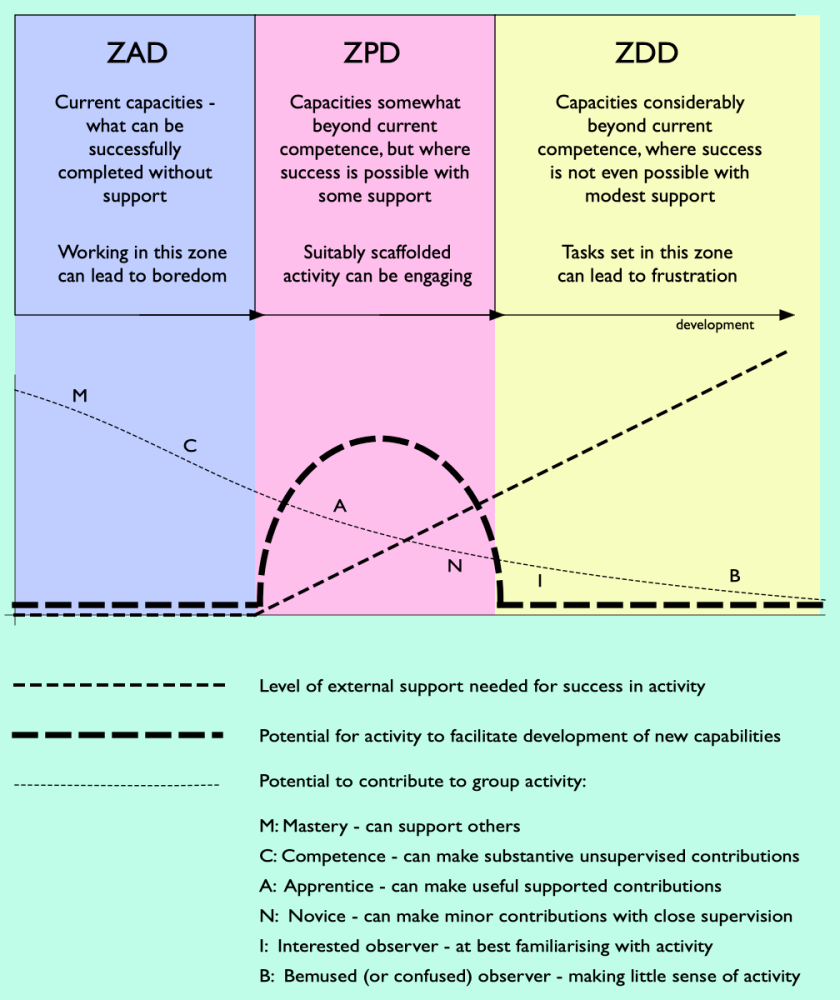
When we focus on the goal (The weight we want to have on the barbell, the skill we wish to possess, the pace we want to be able to sustain) we very often take ourselves beyond of the Zone of Proximal Development and into frustration, the feeling that “I’ll never be able to do this.” I remember feeling this way about any number of skills, but the more we commit to the process the more evidence we have of what is possible.
The zone itself is an ever-moving set of goalposts; once you have your first chin-up you’ll want your first pull-up, and then once you have that it’s not long before we want our first muscle-up, and on and on. Similarly if we settle on a scaled option and don't progress it we lapse into boredom and apathy.
Like Landy, the best results and the greatest degree of satisfaction comes with a focus on the training as an end in itself, to make the most of each session as a celebration of our capacity without feeling the need to always improve it.
Ask yourself “How much is enough?” How strong, skilled, or enduring would be enough? If I never hit another personal best in my life I’d be quite satisfied. Training to exercise the capacities I have, to use them in order not to lose them, is enough for me. As it turns out this approach has yielded the best results I’ve seen in nearly fifteen years of training.
Luckily for most of you there are plenty of years left before you need to start thinking this way, but a mindset of curiosity and marginal improvements can benefit you immediately. Burn the goals, embrace the process. What step forward will you take this week?
